Trogir is a small, compact and richly detailed “jewel box” of a town. Recognised as a UNESCO World Heritage Site, it holds over two thousand years of history within its stone walls, and it is easy to explore without needing a plan.
Its narrow streets lead past Venetian palaces, Romanesque churches and small squares where local life continues. The Cathedral of St Lawrence is the centrepiece, and its carved stonework is well worth a closer look. Nearby lanes open onto small courtyards, loggias, and sunlit waterfront stretches that illustrate her understated grandeur.
For a touch of drama and a nod to her strategic past, Kamerlengo Fortress sits by the sea edge, built during the Venetian period and still defining the skyline with its sturdy towers and ramparts.
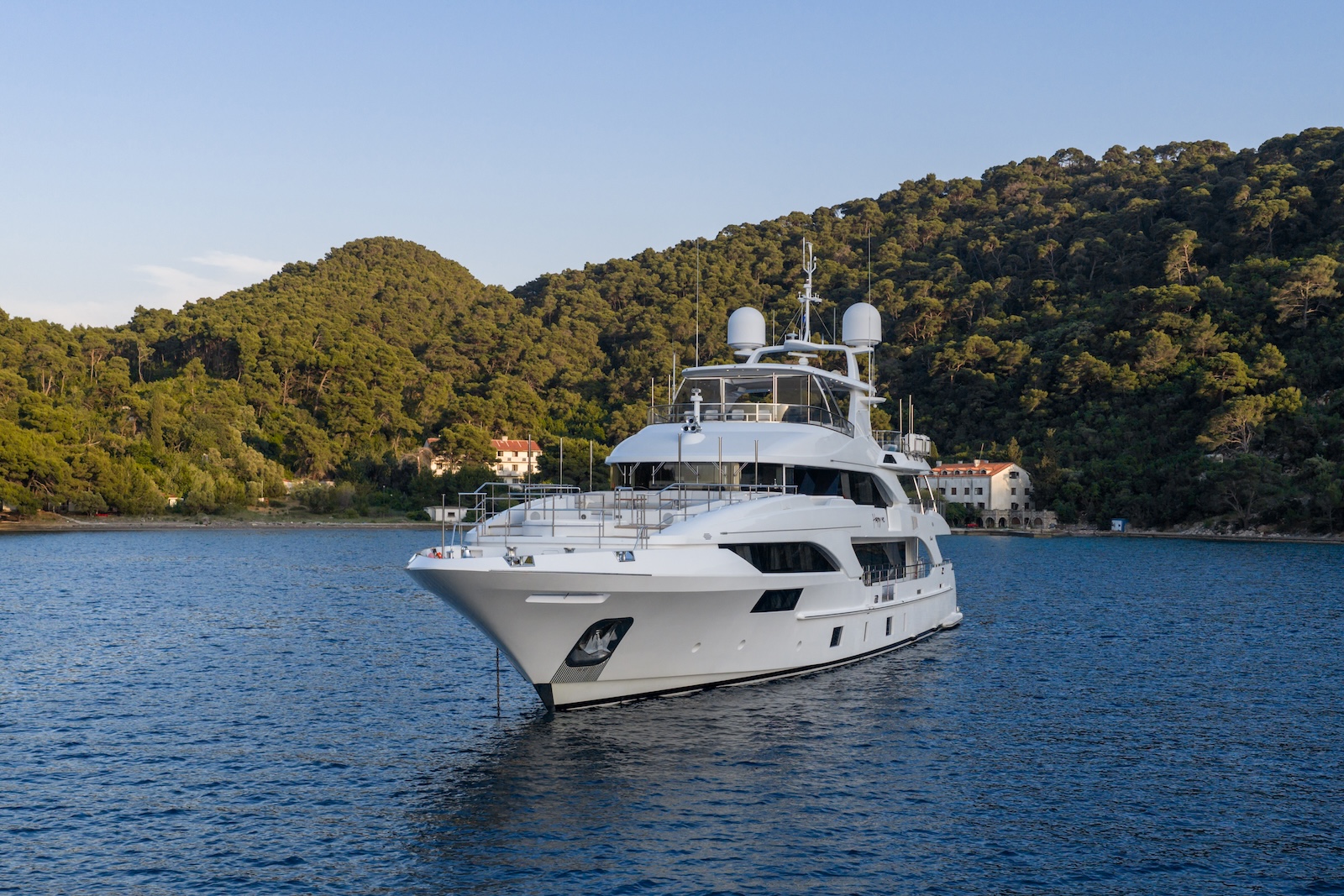
As the home berth of HAPPY ME, and with Split Airport only a short drive away, Trogir offers both practical convenience and genuine character.
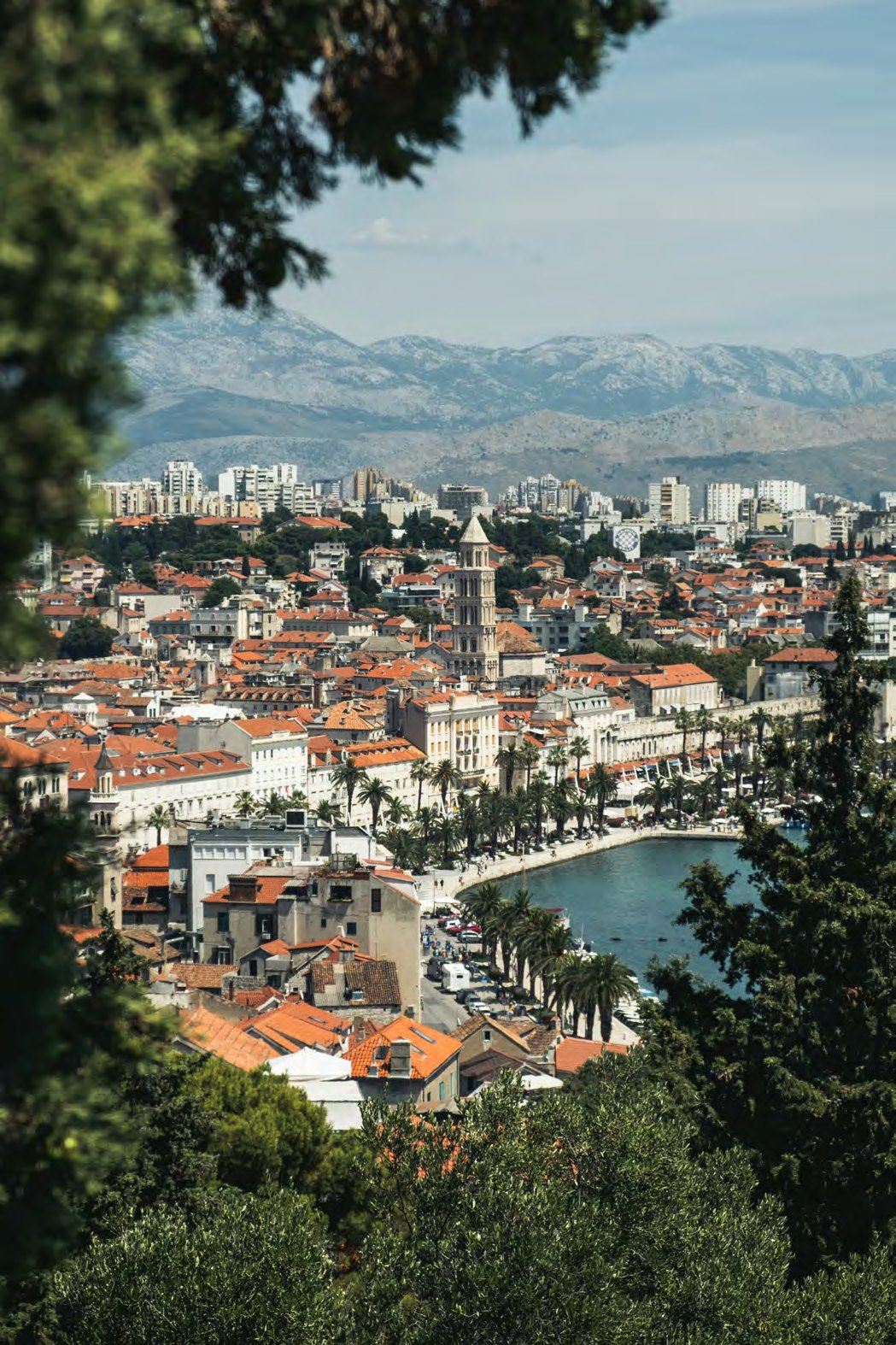
Split is built around the Diocletian Palace, with everyday life taking place within its ancient walls. What began as a Roman emperor’s residence now holds homes, cafés, shops and courtyards, so history and modern life are closely intertwined.
The Peristyle Square and the Cathedral of Saint Domnius form the heart of the old town, while the palace basements offer a fascinating view of the structure beneath the streets. The Riva promenade provides an easy coastal walk, especially in the early evening.
For a change of pace, a walk up Marjan Hill offers shaded trails and panoramic views over the city and islands. As a city she has energy, but Split remains genuine and easy to enjoy.
The island of Visovac is among the most important natural and cultural features of the Republic of Croatia. The hermits of St. Augustine have been located there until the middle of the 15th century, from 1445 the Franciscans, who built the monastery and the church of the Mother of Mercy there in 1576, and together with the magnificent landscape of Visovac Lake, they create a unique ambient.
Hvar has long held strategic and cultural importance along the Dalmatian coast. The fortress above Hvar Town is a rewarding walk, with wide views over the harbour and the Pakleni Islands.
Just offshore, the Pakleni archipelago provides sheltered lagoons and clear swimming spots that suit an afternoon at anchor. Inland, vineyards, olive groves and lavender fields in season add a softer side to the island and are a pleasant contrast to the waterfront.
Hvar Town combines historic stone streets and elegant squares with a lively harbour atmosphere. It feels sociable and polished, while still keeping a strong sense of place.
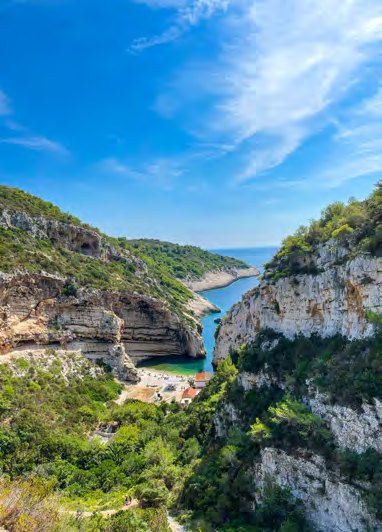
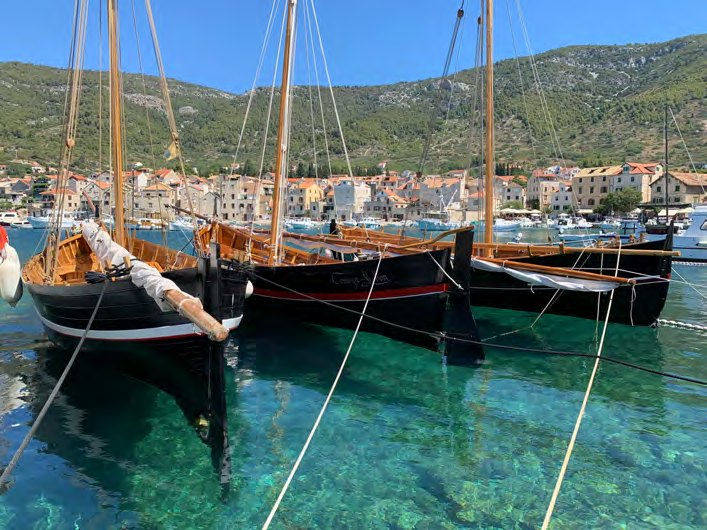
Vis remained closed to foreign visitors for decades, due to its military significance, and that isolation helped preserve its character. Even today it feels quietly traditional, with a calmer pace than many other islands.
The Blue Cave on nearby Bisevo is one of her best-known sights, and the island is highly valued for diving, including underwater sites connected to its recent history. Mount Hum offers panoramic views that give a real sense of the Adriatic’s scale.
Komiza is a fishing village that reflects traditional island life, and the hills behind are shaped by vineyards, olive groves and stone terraces. You will find Vis unspoilt and of interest.
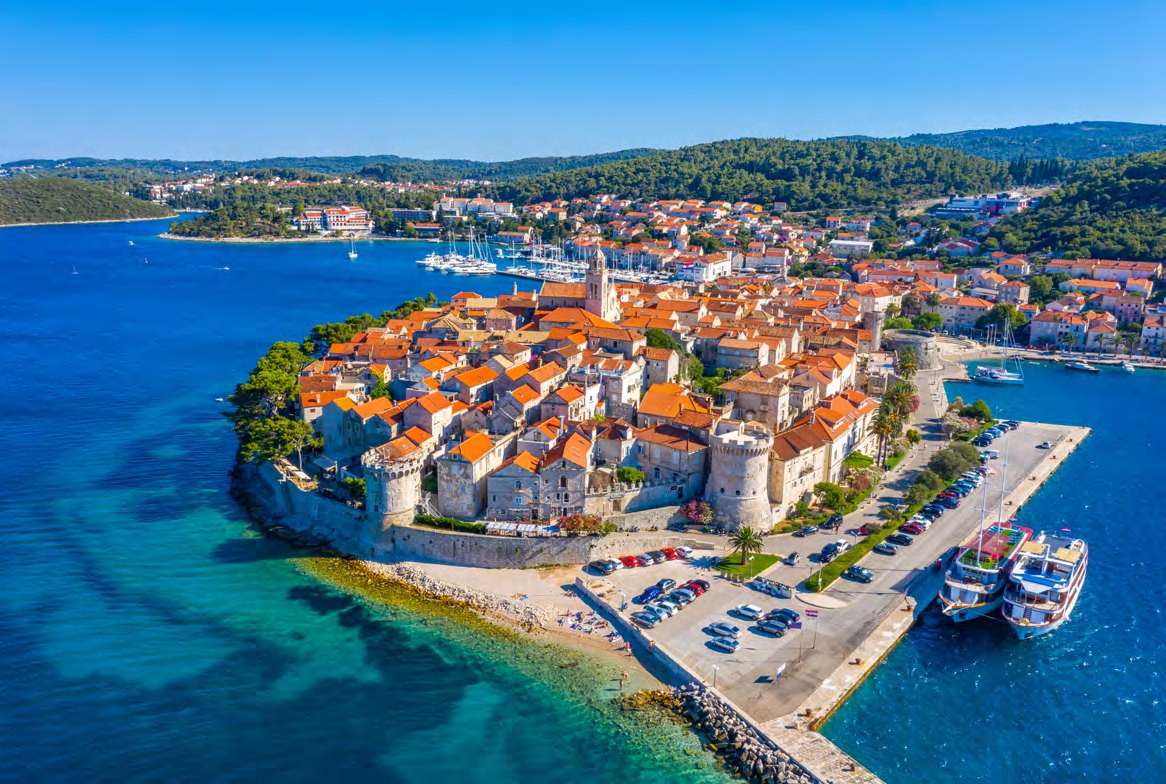
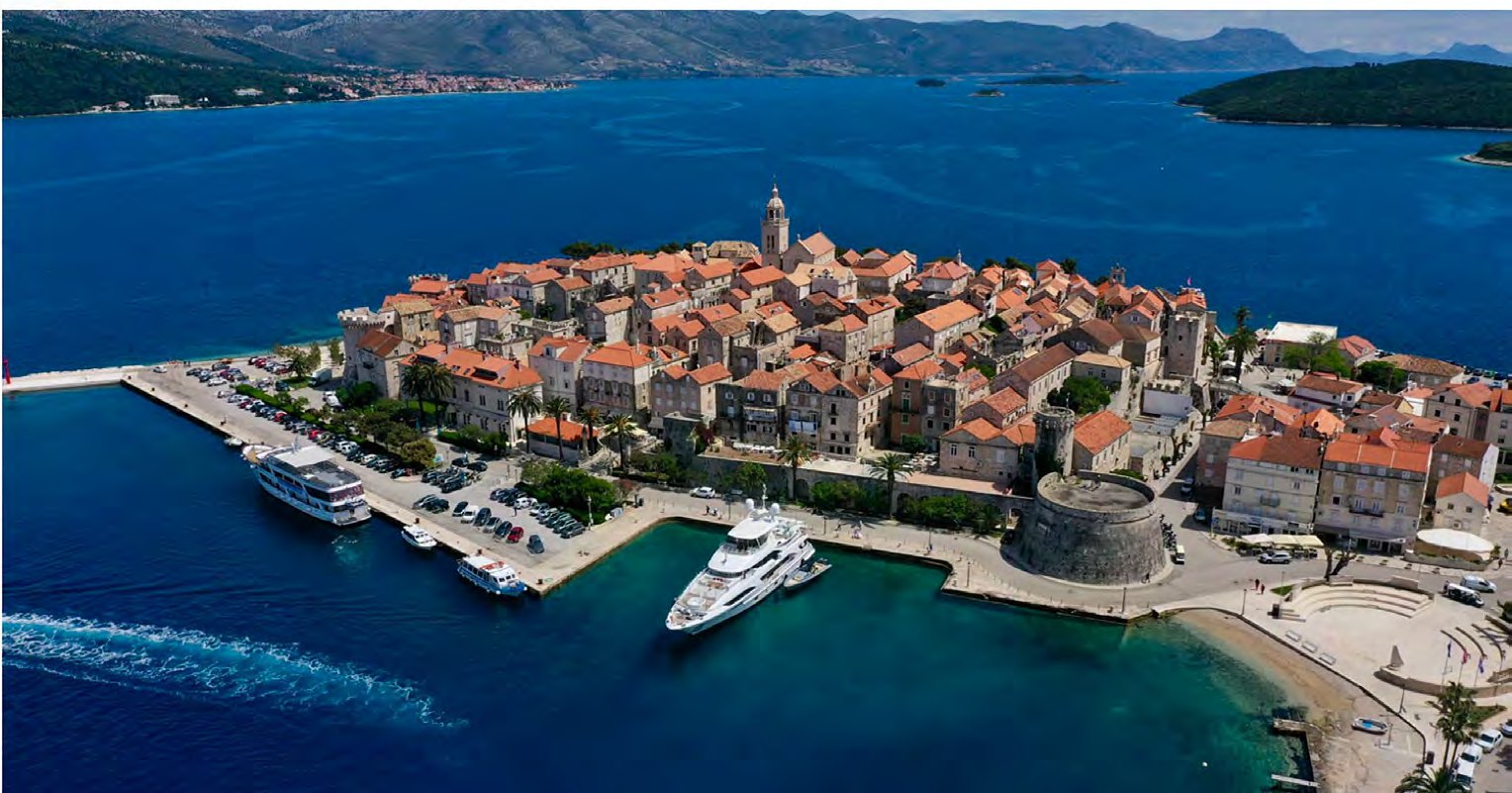
Korcula’s fortified old town is one of the most impressive on the Adriatic. Her stone walls rise directly from the sea, enclosing a network of medieval streets laid out in a distinctive pattern that creates shade and allows the breeze to filter through.
The island is linked to the story of Marco Polo, and the old town contains beautiful Gothic and Renaissance architecture, including the cathedral and a series of historic palaces. It is a wonderful place to explore slowly, with interesting details appearing around each corner.
Beyond the town, vineyards and olive groves shape the landscape. If you can, try to watch the traditional Moreska sword dance being performed. It is a powerful expression of local identity and remains a cultural highlight for many visitors.
Badija is a small island just across from Korcula town, best known for its 14th century Franciscan monastery set among pine trees. The setting is peaceful and the scale is gentle, making it easy to enjoy without any hurry.
A simple walk around the shoreline reveals clear water and quiet places for swimming. Fallow deer are allowed to roam freely, adding a soft, unexpected character to the island.
Badija often feels like a pause in the day, a calm pocket of shade, sea and silence.
Lastovo remains one of the quieter inhabited islands in the Adriatic, with limited development and a small population. It feels genuinely remote, with a strong sense of getting away from the busier routes.
The villages are made up of stone houses and historic churches that reflect centuries of maritime life. The surrounding sea is exceptionally clear, and the coves often feel undisturbed and private, making them ideal for swimming from the yacht.
With minimal light pollution, the night skies can be remarkable. Lastovo offers calm anchorages and a peaceful sense of distance from the everyday.
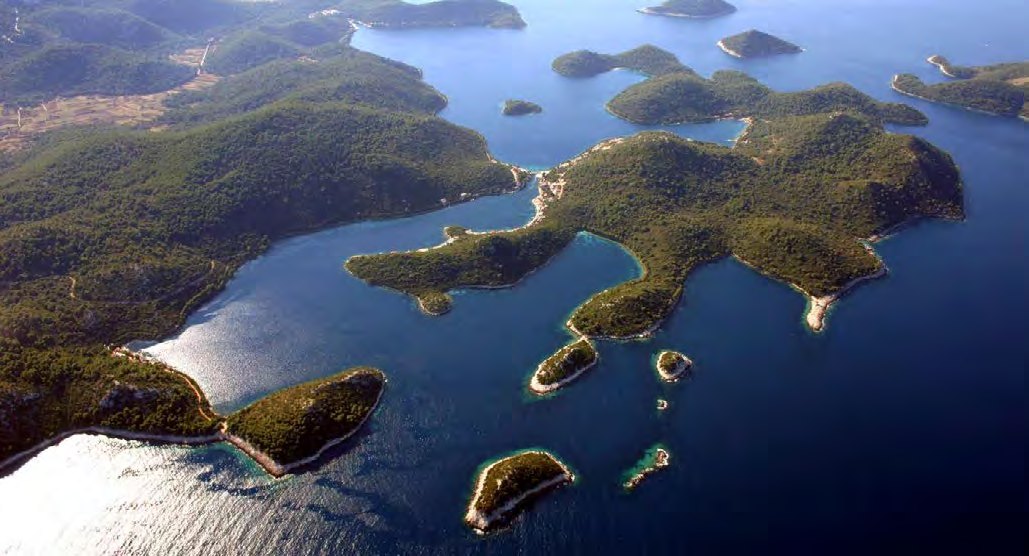
Mljet is widely considered one of Croatia’s greenest and most abundant islands. Much of it is protected as a National Park, with dense forest covering the hills and creating a calm, shaded atmosphere.
Two saltwater lakes sit at the centre of the park, connected to the sea and well suited to swimming or kayaking. On a small islet within the larger lake stands a twelfth century Benedictine monastery, which adds a quiet historical note to the landscape.
The park is easy to explore by bicycle or on foot, and it naturally encourages a slower pace. Mljet feels serene and deeply connected to nature.
Dubrovnik stands on Croatia’s southern Adriatic coast, enclosed by monumental stone walls that have protected the city for centuries. Its beautifully preserved Old Town is a UNESCO World Heritage Site and remains one of the most distinctive historic cities in the Mediterranean.
Inside the walls, polished limestone streets, elegant squares and handsome historic buildings give Dubrovnik a wonderful sense of grandeur. Yet despite its fame, it is not simply a monument to the past. People still live and work within the Old Town, giving it a genuine sense of life and community.
Walking the city walls is one of the best ways to discover Dubrovnik. From here, there are magnificent views across the terracotta rooftops to the Adriatic, while the walls themselves offer a fascinating insight into the strength and independence of the former Republic of Ragusa. Just outside them, Fort Lovrijenac rises dramatically from the cliffs, forming part of the remarkable defensive system that protected the city for generations.
For an entirely different perspective, the cable car to Mount Srd offers sweeping views over the Old Town, the surrounding islands and the coastline. It is particularly memorable later in the day, when the light begins to soften over the Adriatic. Beyond the walls, Dubrovnik has a gentler, more relaxed side. Beaches range from small coves close to the Old Town to those around the Lapad peninsula, where coastal paths and waterfront cafés offer a pleasant contrast to the historic centre.
Within the Old Town there is plenty to explore. The Rector’s Palace and Sponza Palace recall Dubrovnik’s days as a prosperous and sophisticated maritime republic, while the cloister of the Franciscan Monastery provides a quieter and more reflective setting. The Cathedral and its treasury add another layer to the city’s story, and simply wandering through Dubrovnik’s smaller lanes can be just as rewarding, revealing hidden courtyards, stone stairways and unexpected glimpses of the sea.
More recently, Dubrovnik found a new audience as one of the principal filming locations for Game of Thrones, with the Old Town famously transformed into King’s Landing. Many of the locations are instantly recognisable to fans, and tours of the filming sites have become a popular way to discover the city.
Dubrovnik carries its history with great dignity. It rewards those who want to explore its extraordinary past in detail, but it is equally enjoyable for those who simply want to wander, find a café or a quiet corner, and take in the atmosphere of this remarkable Adriatic city.
Just south of Dubrovnik, Cavtat lies in the Konavle region and offers a gentler pace. The harbour is sheltered, the promenade is relaxed, and the setting feels open and calm.
The town has ancient roots, with traces of Roman settlement and a long seafaring tradition. The old town is small and has a waterfront which is pleasant to stroll along.
The headland walks offer simple viewpoints across the bay, and the surrounding hills provide a little elevation without too much effort. Cavtat makes a peaceful conclusion to a journey along the Croatian coast, with natural beauty and an understated charm.