Montenegro makes a natural extension to a southern Croatian itinerary, with a few days allowing time to explore the mystic Bay of Kotor before continuing south along the Adriatic coast.
From Dubrovnik, the route can continue into the Bay of Kotor, with Perast and Our Lady of the Rocks providing an interesting excursion before exploring Kotor and Tivat. From here, the journey continues south towards Budva and the iconic island of Sveti Stefan. For more active guests, the mountains beyond the coast offer hiking and outdoor adventures around Lovcen, while the extraordinary cliffside Ostrog Monastery makes a rewarding inland excursion.
Within the Bay of Kotor, the historic town of Perast and nearby Our Lady of the Rocks make a rewarding excursion.
Small and beautiful, Perast is known for its elegant stone palaces, churches and long maritime history, while just offshore lies Our Lady of the Rocks, or Gospa od Skrpjela, a small man-made island with a 17th-century church.
According to local tradition, the island was gradually created by sailors placing stones around a reef after an icon of the Madonna and Child was discovered there. Today, the church contains paintings and maritime offerings collected over centuries.
Kotor sits at the end of the Bay of Kotor, surrounded by steep mountains that rise dramatically from the water. The Old Town is a UNESCO World Heritage Site, with medieval walls, stone streets, churches and small squares that are easy to explore on foot.
The old fortifications climb high above the town and reward those making the ascent with wonderful views across the bay. For an easier route into the mountains, the cable car from Kotor provides another spectacular perspective over the coastline and surrounding landscape.
The approach by sea is one of the highlights of cruising Montenegro, with the scenery becoming increasingly dramatic as the yacht travels deeper into the bay.
Tivat offers a more contemporary side of Montenegro and is home to Porto Montenegro, one of the Adriatic’s best-known superyacht marinas and a natural base from which to explore the Bay of Kotor.
The waterfront has a relaxed and polished atmosphere, with restaurants, cafés and boutiques lining its promenades and overlooking the marina. Beach clubs and nearby bays provide plenty of opportunities to spend time by the water, while the town comes alive during the summer months.
Well positioned between the historic towns of the bay and Montenegro’s mountainous interior, Tivat is also an excellent starting point for excursions inland. Its cosmopolitan atmosphere provides an appealing contrast to the medieval character of Kotor and the quieter villages scattered around the bay.
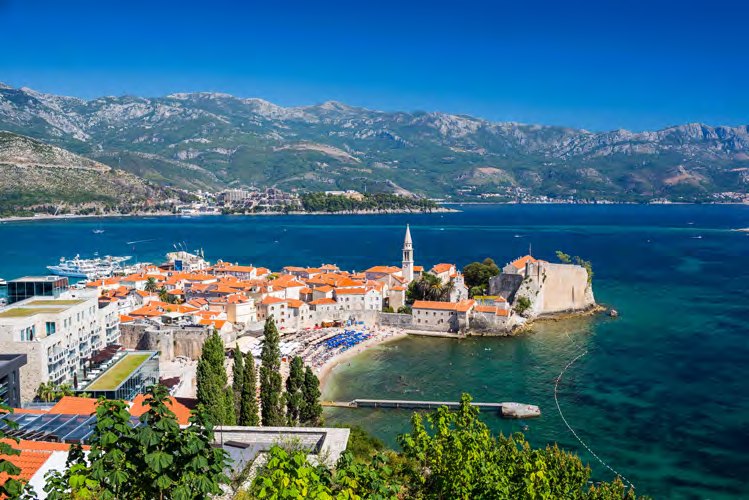
Budva is one of Montenegro’s oldest coastal towns, with a walled Old Town sitting directly beside the Adriatic. Its narrow stone streets lead between small squares, churches and historic buildings, and it is easy to explore on foot.
Outside the walls, the coastline stretches towards a number of beaches and bays, while the waterfront becomes livelier during the summer months. Restaurants, bars and beach clubs give Budva a more energetic atmosphere than many of Montenegro’s smaller coastal towns.
Budva combines history, beaches and a lively summer scene, making it an excellent introduction to the Montenegrin coast.
Sveti Stefan is one of the most recognisable sights on the Montenegrin coast, its cluster of stone houses and terracotta roofs connected to the mainland by a narrow causeway.
Originally a fishing village and later transformed into an exclusive hotel resort, the island is particularly striking when viewed from the sea and makes a memorable sight while cruising south from Budva.
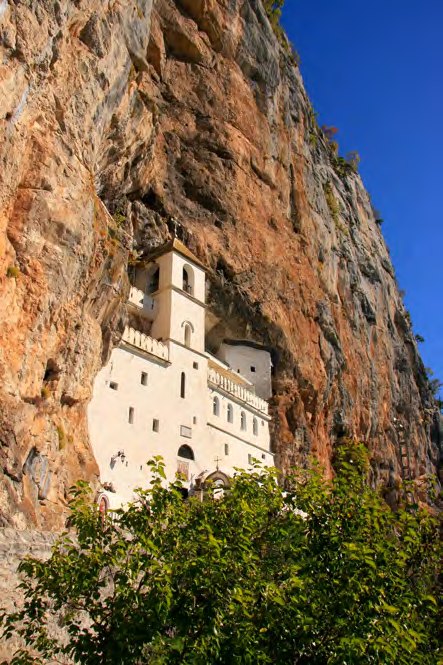
Ostrog Monastery is one of Montenegro’s most extraordinary landmarks, built dramatically into a sheer cliff high above the surrounding valley.
Founded in the 17th century by Saint Vasilije of Ostrog, the monastery is divided into upper and lower sections, with the upper monastery set into the rock face around 900 metres above sea level.
More active guests can incorporate walking or hiking into the visit, while the journey inland provides a very different perspective on Montenegro, moving away from the coast and deep into its mountainous interior. The monastery’s remarkable setting and religious importance make it a rewarding excursion for those wishing to explore beyond the coastline.
Lovcen rises dramatically behind the Bay of Kotor and offers some of the region’s best opportunities for hiking and exploring Montenegro’s mountain landscapes on foot. Trails wind through Lovcen National Park, with routes suited to different levels of fitness and spectacular views towards the coast. At more than 1,600 metres above sea level stands the mausoleum of Petar II Petrovic-Njegos, Montenegro’s celebrated poet and ruler.
The mausoleum is reached by a long flight of steps, with far-reaching views across the surrounding mountains from the top. For active guests, a hike through the national park combined with a visit to the mausoleum provides a memorable contrast to a day spent on the water.